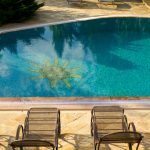
A pool without thoughtful hardscaping around it is a missed opportunity. The pool itself is the centerpiece, but the patio is what turns the backyard into a place people actually want to spend time — not just swim in and leave. A well-designed pool patio creates zones for lounging, dining, and gathering that extend the usability of your outdoor space well beyond swim time.
Pool patio design in Rhode Island needs to account for the region’s specific conditions: wet summers with humidity, salt air near the coast, frost cycles in winter, and a relatively short but intensely used outdoor season. The materials and layout decisions you make upfront directly affect how the space looks and performs for years to come.
Here’s how to approach the design process the right way.
Start With Layout Before You Pick Materials
The most common design mistake people make when planning a pool patio is jumping straight to material selection — pavers, concrete, natural stone — before thinking carefully about how the space will actually function. Layout and zone planning should come first.
A well-designed pool patio typically includes at least two or three distinct functional zones:
The pool surround. This is the immediate decking that runs alongside the water — the area where people walk, sit on the edge, and step in and out. It should be generous enough to feel comfortable but not so wide that it eats up the whole yard.
A lounging area. This is where chaise lounges, poolside chairs, and umbrellas go. Ideally it has some shade, either from a pergola, a sail shade, or nearby trees. In Rhode Island’s summer sun, a shaded lounging area gets used significantly more than a fully exposed one.
A dining or gathering area. Separate from the pool surround, this is where an outdoor table, chairs, and potentially a grill or outdoor kitchen go. Having this zone offset from the immediate pool area keeps wet swimmers from dripping through the dining space and gives the backyard a sense of flow.
Choose Materials Built for New England Conditions
Rhode Island’s climate is harder on hardscape materials than many homeowners realize. Freeze-thaw cycles in winter, summer humidity, and UV exposure all put stress on patio surfaces over time. The materials you choose need to handle these conditions without cracking, fading, or becoming dangerously slippery.
Concrete pavers are one of the most popular and practical choices for pool patios in Rhode Island. Individual pavers can be replaced if one cracks, which is a significant maintenance advantage over poured concrete slabs. They come in a wide range of styles, colors, and textures and can be laid in patterns that add visual interest.
Natural stone — bluestone, travertine, and similar options — offers a premium look with excellent durability. Travertine in particular stays relatively cool underfoot in direct sun, which is a meaningful comfort advantage around a pool. It’s a higher cost investment but one that tends to hold up well.
Porcelain pavers are a newer option that has gained significant traction in recent years. They’re extremely durable, virtually maintenance-free, available in large format sizes that create a clean contemporary look, and highly resistant to staining and moisture.
Whatever material you choose, slip resistance around the pool surround is non-negotiable. Make sure any surface you select has appropriate texture ratings for wet environments.
Pools Plus works with materials from Techo-Bloc and Unilock, two of the most respected hardscape material manufacturers in the industry. The Pools Plus Hardscapes Division can walk you through the full range of options and help you find the right fit for your design goals and budget.
Think About Shade Early
Rhode Island summers are beautiful, but midday heat and UV exposure are real. A pool patio without any shade structure tends to get underused during the hottest part of the day. Planning for shade upfront — rather than adding it awkwardly after the fact — results in a better-looking and better-functioning space.
Options range from a formal pergola integrated into the patio design, to a freestanding shade sail, to a cantilever umbrella positioned strategically over the lounge area. Whatever you choose, anchor points and structure for shade should be factored into the patio design before construction rather than bolted on after.
Lighting Extends Your Season
One of the most transformative things you can do for a pool patio is invest in good outdoor lighting. A well-lit pool and patio extends your usable hours significantly — evening swims, dinner outside, and late-night gatherings all become more enjoyable when the lighting is thoughtfully designed rather than just functional.
Consider a layered approach: ambient lighting for the general patio area, accent lighting to highlight plantings or architectural features, and pool-specific lighting in the water for ambiance. LED systems are now the standard for efficiency and longevity.
Integrate Features While You're Building
The most cost-effective time to add features like a fire pit, outdoor kitchen, or water features is during the initial patio build, not as later additions. Integrating these elements from the start means the hardscape design can accommodate them properly, drainage and utilities can be roughed in at the right stage, and the finished result looks intentional rather than assembled over time.
A built-in fire pit near the lounging area, for example, extends the outdoor season well into fall — a meaningful benefit in Rhode Island where October evenings are often beautiful but cool. Pools Plus builds fire pits, outdoor kitchens, and retaining walls as part of comprehensive hardscape projects.
Work With a Designer Who Understands Pools
Pool patio design and generic patio design are related but different disciplines. A patio designer who understands pool installations knows how to handle drainage away from the pool, how to select materials appropriate for constant water exposure, how to create transitions between the pool and the surrounding yard, and how to position features in relation to sun angles and sightlines.
The Pools Plus Hardscapes Division works directly with pool installations, which means the design and construction of your pool and your patio are coordinated by the same team. That integration shows in the finished result. Contact Pools Plus to start a conversation about your backyard design and get a quote for your project.