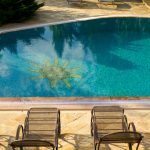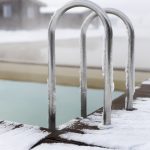
The pool is the focal point of a backyard. The patio material surrounding it is what ties everything together — affecting how the space looks, how safe it is to navigate wet, how much maintenance it requires year over year, and how well it holds up through Rhode Island’s freeze-thaw cycles. Choosing the wrong material is an expensive mistake to correct after the fact. Choosing the right one produces a backyard that looks great and functions well for decades.
Rhode Island homeowners planning a pool patio have several solid material options to consider, each with genuine advantages and real tradeoffs. Here is how to evaluate them.
The Rhode Island Climate Factor
Before looking at individual materials, understand the environmental context they’ll be operating in. Rhode Island subjects hardscape materials to conditions that many pool-region markets don’t face:
Freeze-thaw cycles. Winter temperatures that repeatedly cross the freezing threshold cause materials to expand and contract. Over years, this stresses any material that absorbs water — concrete, certain natural stones, poorly installed pavers — leading to cracking, spalling, and heaving.
Summer UV and heat. Pool decks in full sun get very hot. Materials with high heat absorption — dark concrete, certain natural stones — can be uncomfortable to walk on barefoot in July and August.
Salt and chemical exposure. Pool water splashing onto the patio, along with chemical applications near the pool edge, affects some materials more than others. Materials with high porosity absorb these chemicals and may stain or deteriorate faster than denser alternatives.
Any material you choose for a Rhode Island pool patio needs to handle all three of these conditions well, not just one or two.
Concrete Pavers
Concrete pavers are the most common pool patio material in Rhode Island for good reasons. They’re durable, versatile in design, available in a wide range of colors and profiles, and — critically — they handle freeze-thaw conditions better than poured concrete slabs because the individual units can shift slightly without cracking. When a single paver cracks or settles, it can be replaced individually without disturbing the surrounding surface.
The surface texture of pavers matters significantly for a pool environment. Smooth concrete pavers can be slippery when wet — a real safety concern around a pool. Textured or tumbled surfaces provide better slip resistance and are the standard recommendation for pool surrounds. Pools Plus works with paver manufacturers including Techo-Bloc and Unilock, whose pool-appropriate surface options are specifically engineered for wet environments.
Maintenance: Occasional joint sand replacement and periodic sealing (every 2 to 3 years) maintain the appearance and performance of concrete pavers over time. Relatively low ongoing commitment.
Natural Stone
Bluestone, travertine, flagstone, and granite are all used for Rhode Island pool patios, and each has a distinct look and performance profile.
Travertine is worth highlighting specifically because it remains relatively cool underfoot in direct sun due to its lower heat retention — a genuine comfort advantage for a barefoot pool deck in summer. Its natural texture also provides good slip resistance. The tradeoff is that travertine is porous, requires sealing, and needs more maintenance attention than manufactured alternatives.
Bluestone is a regional material with a natural New England aesthetic that looks particularly at home in Rhode Island backyards. It’s dense and durable but can be slippery when wet unless specifically textured or flamed. It holds up well to freeze-thaw cycles when properly installed with adequate base preparation.
Flagstone in various forms offers an organic, irregular aesthetic that works beautifully in naturalistic pool settings. The irregular surface provides good traction when the joints between stones are filled with a textured material.
Natural stone carries a higher initial cost than concrete pavers, but the aesthetic quality and longevity of properly installed natural stone is excellent.
Porcelain Pavers
Porcelain has emerged as one of the most compelling pool patio materials available in recent years, and Pools Plus Hardscapes Division works with porcelain as one of its primary contemporary options. Here is why it deserves serious consideration:
Porcelain pavers are virtually non-porous — they don’t absorb water, pool chemicals, or staining agents the way natural stone and concrete do. They resist fading, staining, and the efflorescence (white salt deposits) that sometimes affects concrete over time. They’re available in large-format sizes that create a clean, contemporary look. And they handle Rhode Island freeze-thaw cycles extremely well because the material doesn’t absorb the water that causes expansion damage.
The tradeoff is cost — porcelain pavers are at the higher end of the hardscape material spectrum. For homeowners who want the lowest-maintenance, longest-lasting pool patio option available, that cost is typically justified.
What to Avoid
Poured concrete slabs are common and initially economical but have a poor track record in New England pool environments. They crack under freeze-thaw stress and are difficult to repair cleanly without visible patches. They’re also extremely hard on knees and joints when wet.
Wood decking around pools has moisture management challenges that make it a maintenance burden in humid Rhode Island summers, and it deteriorates faster than masonry alternatives in a consistently wet environment.
Any material with a polished or smooth finish — including polished marble or honed stone — is a slip hazard around a pool and should be avoided for the primary pool surround regardless of how beautiful it looks.
Working With the Pools Plus Hardscapes Division
Pool patio selection and installation is most effective when it’s integrated with the pool project rather than treated as a separate scope. The Pools Plus Hardscapes Division designs and installs pool patios as part of comprehensive backyard projects — which means the drainage, the pool edge treatment, and the patio surface are all coordinated from the start.
If you’re planning a pool installation or an existing patio replacement alongside your pool, Pools Plus to discuss material options and get a quote. Fall is an excellent time to plan hardscape projects that will be ready for the following pool season.