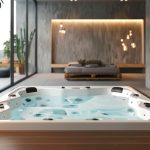
Walking through the Pools Plus showroom in Johnston, sitting in a display hot tub, and imagining it in your backyard is the enjoyable part of the hot tub buying process. What happens between that moment and the first evening you actually soak in your own spa is where most buyers are underprepared.
Hot tub installation involves site preparation, electrical work, delivery logistics, and a startup process that should be understood before purchase — because the site requirements, the timeline, and the associated costs all affect both the total investment and when you’ll actually be using your new spa.
Step 1: Choose the Right Location Before You Buy
The decision about where your hot tub will go should happen before you finalize the model, not after delivery day. Location affects the installation process significantly and some locations that seem appealing aren’t practically workable.
What makes a good hot tub location:
A stable, level surface that can bear the weight of the filled unit. A full-size hot tub with water and occupants can weigh 3,000 to 6,000 pounds. Concrete pads and reinforced patio surfaces are the standard foundation — a standard wood deck requires structural assessment before a hot tub is placed on it.
Proximity to a 240V electrical circuit. Hot tubs in Rhode Island require a dedicated 240V GFCI-protected circuit run to the spa location. If the nearest electrical panel is far from your preferred hot tub location, the electrical run adds both cost and timeline to the installation.
Adequate clearance for service access. Hot tub equipment — the pump, heater, control system — is typically accessible through a panel on one or more sides of the cabinet. This panel needs clearance for a technician to access it comfortably. Avoid locations where the spa is pushed tightly against a fence or wall on the service panel sides.
A garden hose connection nearby. You’ll need to fill the spa initially and periodically drain and refill it. A hose connection within reach of the location makes this straightforward rather than cumbersome.
Step 2: Get the Electrical Work Done First
The electrical circuit for a hot tub must be installed by a licensed electrician and permitted through your municipality. Rhode Island electrical code requires a dedicated 240V, 50-60 amp GFCI-protected circuit with a disconnect panel within sight of the spa.
This work needs to be done before the spa is delivered — not simultaneously, not afterward. The spa can’t be started without power, and coordinating an electrician after the spa is sitting in your yard creates an unnecessary delay between delivery and first use.
Budget for the electrical work as part of the total project cost. The range varies significantly based on the distance from your electrical panel to the spa location and the complexity of the run. Pools Plus can provide guidance on connecting with licensed electricians experienced with spa installations in Rhode Island.
Step 3: Prepare the Foundation
A poured concrete pad is the most reliable foundation for a Rhode Island hot tub — level, stable, and capable of bearing the full loaded weight without settling. The pad should extend a few inches beyond the spa’s footprint on all sides and be a minimum of 4 inches thick for most spa sizes.
An existing concrete patio in good condition can serve as the foundation if it’s level and structurally sound. Have it assessed for levelness with a level before delivery — even a slight grade can affect water balance in the spa and cause operational issues.
If you’re installing the spa in an area where no concrete currently exists, the pad needs to cure before the spa delivery is scheduled. Standard concrete curing takes approximately 28 days to reach full strength, though the spa can generally be placed after 7 days for most applications. Plan for this lead time in your overall installation timeline.
Step 4: The Delivery and Installation Process
Pools Plus delivers and installs hot tubs across Rhode Island, and the delivery process requires some practical planning on the homeowner’s side.
Hot tubs cannot be disassembled — they arrive as a complete unit and need a clear path from the delivery vehicle to the installation location. The delivery crew will typically use a specialized crane or spa dolly to move the unit from the truck to its destination.
Before delivery, walk the path from your driveway or street to the installation location and confirm:
- Width clearance. Hot tubs are typically 7 to 8 feet wide or larger. Gates need to accommodate this, or an alternative path over a fence or from the front yard needs to be planned.
- Overhead clearance. Low tree branches, power lines, and awnings need to be above the unit’s height.
- Ground stability. The delivery crew needs firm ground to maneuver the unit. Soft lawn areas may need temporary boards or a different path.
Communicate any access challenges when you purchase so the delivery team arrives prepared rather than discovering them on arrival.
Step 5: Startup and Orientation
After delivery and electrical connection, the startup process involves filling the spa, balancing the initial chemistry, and getting the unit to operating temperature. Pools Plus provides a spa orientation as part of the purchase — covering the controls, the chemical maintenance routine, the filter care schedule, and what to watch for in terms of equipment performance.
Initial heat-up from cold fill to operating temperature (typically 100 to 104 degrees) can take 12 to 24 hours depending on ambient temperature and the unit’s heater capacity. Plan accordingly — your first soak isn’t the evening of delivery.
Contact Pools Plus to visit the Johnston showroom, wet test available models, and start the conversation about site preparation and installation for your Rhode Island hot tub project.